Flannel Shirt Weights, from 4-Ounce to 9-Ounce
The conclusion first
- Flannel is sold by feel and bought by weight, and the two are not the same conversation.
- A clerk hands you something soft, the tag says nothing useful, and the shirt that felt like a cabin weekend pills into a rag by February.
- Weight in ounces per square yard is the number that predicts how the shirt hangs and how long the nap survives.
Drawn from the opening of this entry.
Flannel is sold by feel and bought by weight, and the two are not the same conversation. A clerk hands you something soft, the tag says nothing useful, and the shirt that felt like a cabin weekend pills into a rag by February. Weight in ounces per square yard is the number that predicts how the shirt hangs and how long the nap survives. It is the same arithmetic that governs denim, and almost no flannel listing publishes it, which is reason enough to learn it.
The three weight bands
Lightweight flannel runs 4 to 5 ounces. It drapes close, layers under a sweater without bulk, and works in offices kept at 72 degrees. The standard band, 5.5 to 7 ounces, is where work-shirt tradition lives, warm enough as an outer layer through autumn, substantial enough to take a decade of washing. Heavyweight starts at 8 ounces and runs to 9 or beyond; it replaces a light jacket in dry cold and creases like wool. A shirt that does not publish its weight can be estimated by feel: if you can read print through it held to light, it is under 5 ounces.
The bands also decide what the shirt is allowed to do. A 4-ounce shirt tucked under a sweater is insulation, not outerwear, and asking it to carry a winter coat’s job is how lightweight cloth earns its thin reputation. A 9-ounce shirt buttoned over a t-shirt replaces the sweater entirely. Buying one band and demanding another band’s performance is the most common flannel complaint, and it is a complaint about the purchase, not the fabric.
Brushing changes the math
Flannel is defined by brushing, a mechanical raising of the fiber ends from the woven face, not by looseness of weave. Brushing adds loft and warmth, but a brushed face wears faster than a hard face: the nap mats and pills, then flattens where skin and straps rub. Double-brushed cloth, raised on both sides, maximizes softness and minimizes lifespan, which is why disposable-priced shirts favor it. Single-brushed keeps one hard face for the world and one soft face for you; it is the construction behind most flannels that end up handed down. Ask which you are buying, because the answer separates the shirt you wear from the shirt you keep.
Reading the tag in the shop
Tag vocabulary is thin, so it pays to know the few words that appear. “Brushed” or “peached” confirms the fabric is flannel at all. “Yarn-dyed” on a label is the one word worth hunting for: it means the check was woven in rather than printed on, and it survives laundering the way the section below describes. “Sanforized” means the cloth was mechanically pre-shrunk at the mill, and it predicts a collar that stays near its stated size after the first wash.
When the tag offers none of this, the fabric answers anyway. Hold it to the light — print-through means under 5 ounces, as above. Check the wrong side for a ghosted pattern. Pinch the collar point and the cuff edge, where wear will show first; a cloth that already feels thin at those spots will not improve with age.
Yarn-dyed beats printed
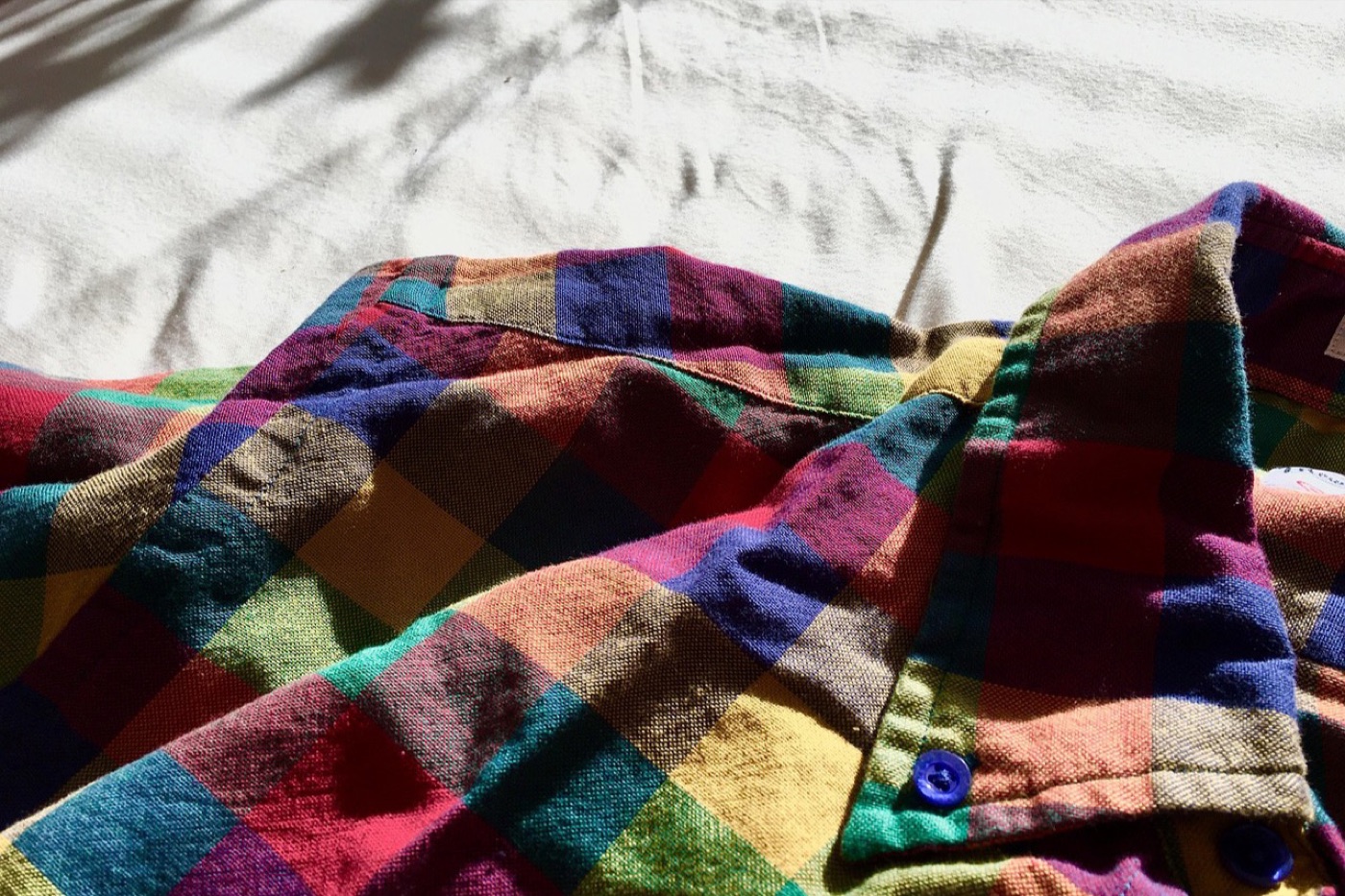
The plaid is where flannel quality hides in plain sight. Yarn-dyed cloth is woven from thread already dyed, so the pattern runs through the fabric and each wash only softens the edges. Printed flannel is white cloth with the pattern rolled onto the surface; it fades on the fold lines and collar first. The check is quick: look at the underside of the fabric against light. Yarn-dye shows the same grid on both faces, slightly muted; a print shows a ghosted gray of the pattern, like a photograph of it. At equal weight, yarn-dyed flannel is worth a third more in price and several times more in years.
Wool flannel, the ancestor
Before cotton workwear took the word, flannel meant wool, carded and woven in the West of England; Fox Brothers of Somerset, milling since 1772, still produces the reference cloth. Woolen-spun wool flannel holds more air than cotton of the same weight, resists wrinkles flat out, and moves moisture rather than absorbing it, which is why it remains the right choice for proper cold. It also demands wool’s usual care; washing wool at home covers the cold-water, flat-dry routine that keeps it alive. Cotton flannel asks less: cold wash, low tumble, and acceptance of that first-shrink.
What wears out first
Flannel fails at friction points before it fails anywhere else. Collar points soften and curl where skin oils collect. Cuff edges thin against desk surfaces and jacket linings. Across the back, the nap mats in the exact bands where bag and backpack straps cross, which is why a flannel worn under a loaded pack ages on a diagonal.
Heat is the other accelerator. Hot washing and hot drying shrink the cloth and harden the nap, turning soft fiber ends into something closer to fuzz that pills. Cold wash, hang dry, or a short low tumble keeps the surface a shirt was bought for.
Rotation buys the nap time for free. A flannel worn two days straight never fully dries at the collar and cuffs, where skin moisture collects, and a damp nap mats faster than a dry one. Two shirts alternating through a week outlast one shirt worn daily by a wide margin, because each gets the rest day that lets the fiber ends stand back up. A wooden hanger does the same job overnight; a week crumpled in a gym bag does the opposite.
The weight logic carries across fabric families the same way denim ounce weights does, and flannel sits in the same tier as coat fabrics worth paying for. Between the bands, the brush construction and the dye method, the shirt on the rail states its case before the label does.
FAQ
- What weight flannel should I buy?
- Match the band to the job. Four to five ounces layers under knitwear and works indoors. Five-and-a-half to seven ounces is the standard work-shirt weight, warm enough alone from autumn to spring. Eight ounces and up stands in for a light jacket and is too hot for heated rooms.
- Why does cotton flannel shrink so much?
- Unsanforized cotton shrinks 3 to 5 percent on first washing, and brushed fabric shrinks more visibly because the raised nap contracts. Wash cold and hang dry to keep the loss near the low end, and expect one collar inch of shrink on an unsanforized 17-inch collar.
- Is double brushing better than single?
- Double-brushed fabric is brushed on both faces, so it feels softer against skin and insulates slightly better, but it pills faster and looses body faster. Single-brushed flannel keeps one crisp face, wears longer, and is the better choice for anything you plan to keep five years.
Fill power is only half the number on a down jacket — the other half is how…
Gabardine weight, storm shields, the back yoke, belt hardware and removable…
The Super number, the cloth weight and the cashmere percentage on a coat label…
Denim weight in ounces predicts break-in, shrinkage and lifespan. The tiers…