Johnny Was Silk and Fabric Claims, Spec Checked
What the appraisal found
- Silk clothing shop — Fabric-first tier
- Silk kimonos — Statement fiber
- Partner storefront — Same catalog, low-stakes entry
Comparison reflects the brand's own categories and documented fabric claims, checked November 2026.
Johnny Was sells atmosphere first and fiber second, which makes it the exact kind of brand where the fabric claims deserve a spec check before the credit card does. The storefront leads with jewel tones, sheer layers and what it calls ultra-luxurious silhouettes — and to its credit, it does maintain a dedicated silk clothing shop and documents its statement pieces as 100% silk. But silk at $300 to $1,800 is a claim you verify, not a word you take, and the same goes for the velvet, cashmere, merino and cotton gauze the brand mixes through the collection.
This audit walks the brand’s documented fabric range the way we would walk any listing: what each fiber name commits the brand to, what it conveniently leaves out, and what you can check from the product page and then the delivered garment.
What “100% silk” commits the brand to
Under US labeling rules, a “100% silk” claim is an absolute statement — the fabric must be entirely silk, with no tolerance for blending. That makes it the strongest fabric claim on the site, and the piece it is attached to most visibly is the long silk kimono: reviewers document the Aziza Long Kimono as a current 100% silk example, and the silk kimonos category prices these pieces at the very top of the brand’s range, up to around $1,800. At that price the fiber claim is not a detail; it is the entire product.
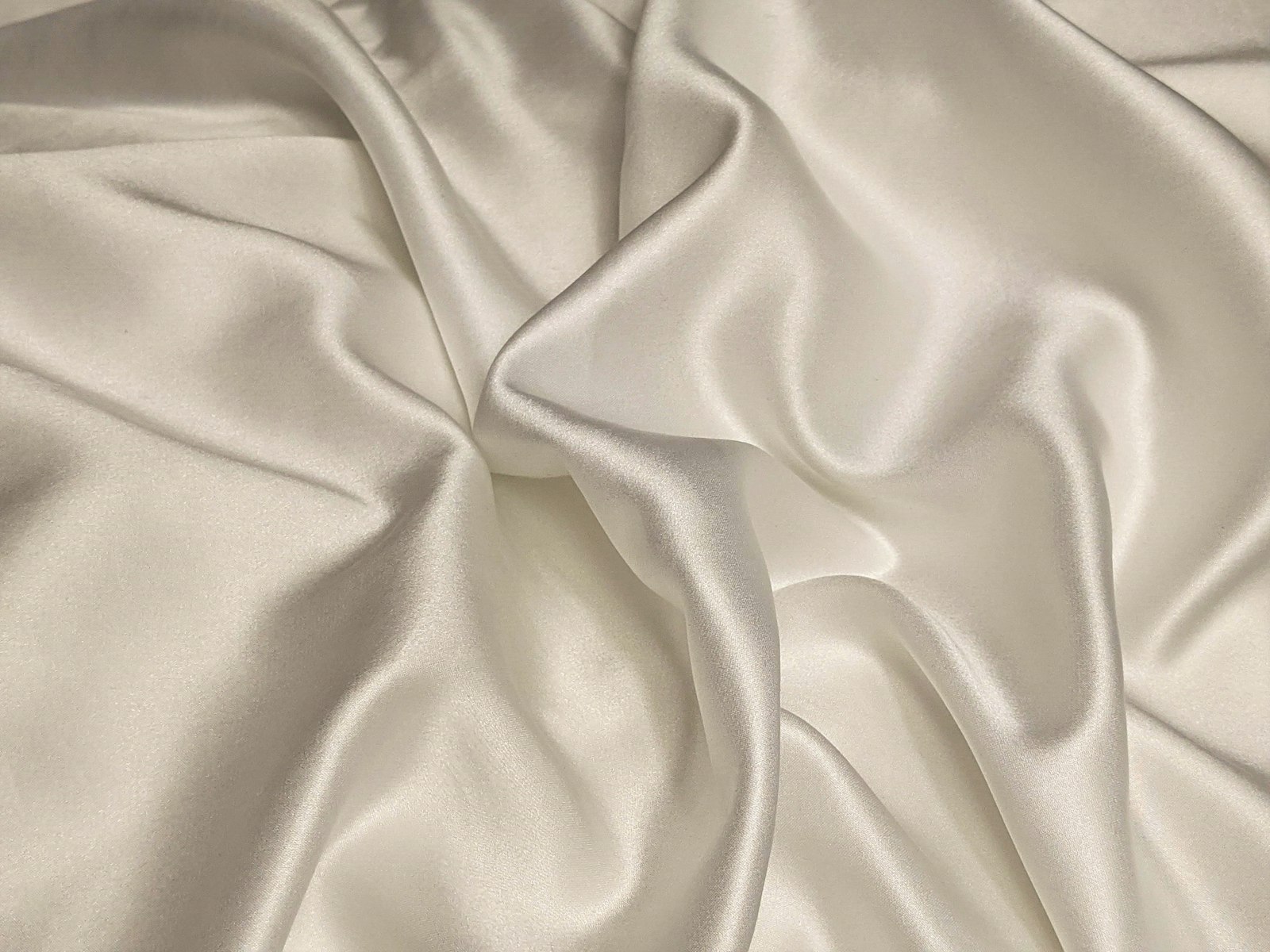
What the label does not tell you is the weave or the weight. “Silk” can mean charmeuse with a liquid satin face, crepe with a matte grain, or sheer georgette that weighs almost nothing — and the difference between them is most of the difference between a $400 and an $800 garment. We cover that grammar in momme weights and silk labels: momme is the silk industry’s own weight measure, and the fact that no US retail brand publishes it is why the drape check below carries the audit instead.
The weave glossary the label never gives you
Because the storefront sells by mood rather than by weave, the buyer needs the glossary anyway. Four weaves cover nearly everything sold as silk at this tier, and each one makes a different garment:
- Charmeuse is the satin-faced weave with the liquid shine — the silk of slip dresses and bias-cut tops. It shows every pull and snag, drapes closest to the body, and is the weave most often photographed to imply more weight than the piece has.
- Crepe de chine is matte, slightly pebbled, and the most forgiving of the group — it resists shows-through, tailors into shirts and blouses without clinging, and reads as expensive in daylight rather than under studio lights.
- Georgette and chiffon are the sheer layers the brand’s campaign copy celebrates. They weigh almost nothing, which means the fabric content page should be read carefully: sheer silk is real silk at a fraction of the fiber cost, priced on the print rather than the material.
- Habotai and plain-weave silks back the embroidered pieces — the ground the stitch work sits on. Their quality lives in density, and the light test below is the fastest read on it.
The practical translation: when a product page says only “silk,” the weave named in the garment title or style name (“satin,” “crepe,” “sheer”) is doing the work the label omits, and the price should be judged against what that weave actually is.
Weight is also the one property no photograph can fake and no price can substitute. Sheen can be lit into existence by a product studio; drape can be pinned and steamed on the sample; but fiber density is bought at the mill and shows in every frame if you know where to look. In the product photos, weight hides in two places: how sharply the fabric folds (dense silk makes narrow, crisp creases that hold their edge; thin silk folds in broad, soft collapses) and how the hem falls at rest (heavy silk hangs in columns; light silk floats and flares). Neither tell is conclusive alone — but both are free, and together they narrow the guesswork before the garment ever reaches you. The reverse also holds: shine without weight is the single most common gap between a Johnny Was product photo and the piece that arrives, because satin-face photography flatters thin weaves the most.
The five-minute fabric check
Run this before checkout, then again on arrival:
- Fiber and percentage on the product page. A documented “100% silk” is a legal claim; “silky,” “silk-feel” or an unnamed blend is not silk at all. This is the same first move as in reading a product listing — the spec table outranks every photograph.
- The care label against the claim. Silk is washed cool, gently, and often by hand. A care label that says machine wash hot on a “silk” piece is telling you the fiber content is not what the marketing implies, or that the finish will not survive silk handling.
- Weight against the price. Hold the garment (or judge from the drape shots): real weight lives in the fold of the fabric, not the shine. A heavy fold that collapses slowly is dense, high-momme silk; a weightless shimmer is a sheer weave priced on print.
- The light test. Hold the fabric up to a window. A dense weave glows evenly; a loose weave shows pinpricks of light between yarns and will snag and shift within a season.
- The return policy. Fabric disappointment on final-sale items is the recurring documented complaint about this brand — which makes the return window part of the fabric spec, not an afterthought.
The rest of the fabric range, honestly graded
The collection’s supporting fibers behave differently, and the claims attached to them are looser:
- Velvet appears on evening pieces and outerwear. Velvet is a construction claim, not a fiber one — check whether the label says silk velvet, cotton velvet or a synthetic pile, because at this price tier all three exist and they feel nothing alike. Crushed velvet in particular reads far more expensive in product photos than on the body.
- Cashmere and superfine merino appear in knitwear. These are fiber names with legal meaning under the Wool Acts labeling rules, so a documented percentage is checkable; a vague “cashmere feel” is not a claim at all. The gauge and ply grammar in reading a sweater label is the companion audit.
- Cotton gauze and soft cotton carry the summer embroidered pieces. Gauze is a weave, and its quality lives in the yarn twist — a dense double-gauze softens with washing, while a loose single layer goes see-through and sags within a season.
- Italian leather appears in the accessories line, priced like the kimonos. The word “Italian” marks origin marketing, not grade — leather grades without the marketing covers what the phrase skips.
The dispute that proves the method
The most instructive fabric complaint documented about this brand is from a buyer who questioned whether a blouse sold as 100% silk was silk at all. The complaint is unverifiable either way — but it is the exact scenario the fiber claim exists for. When the product page names the fiber and percentage, the buyer holds a documented claim; when the label inside the garment disagrees with the page, the claim is broken and the return is justified. That is why the audit order is product page first, care label second, hand feel third — and why the appraiser’s method puts the spec table ahead of the photographs every time.
The brand’s review profile sharpens the same point. At the time of writing, its unclaimed Trustpilot profile sits at 2.2 from a small review base dominated by one-star entries, with fabric disappointment on final-sale items among the recurring themes. Small samples are not verdicts — but they are a reason to buy the first piece returnable, confirm the fiber on arrival, and only then climb the price ladder.
What to buy where the fabric is the point
The picks below are ordered by how directly the fabric carries the price. The first two land on the brand’s own storefront categories; the third is our partner storefront, which reaches the same catalog and is where a first, lower-stakes fabric test should happen.
| Silk clothing shop | Silk kimonos | Partner storefront | |
|---|---|---|---|
| Badge | Fabric-first tier | Statement fiber | Same catalog, low-stakes entry |
| Where | Brand silk shop | Brand kimono shop | Partner landing |
| Fiber claim | Documented silk pieces | 100% silk statement pieces | Varies |
| Check before buying | Weave and drape | Weight against the price | Return policy first |
Comparison reflects the brand’s own category structure and documented claims, checked November 2026.
Care that protects the fiber
Silk survives the purchase only if the laundry cooperates. Wash silk pieces by hand or on a delicate cycle in cool water, hang or lay flat to dry away from direct sun, and never wring — wet silk fibers are at their weakest and the creases set where you squeezed. Velvet should never be ironed flat; steam it hanging and let the pile recover on its own. Gauze and cotton tolerate machine washing but shrink on high heat, which distorts the embroidery panels sewn onto them. The full washing wool at home and washing down jackets methods cover the knit and filled pieces in the same wardrobe, and conditioning leather without darkening covers the accessories tier. A garment this expensive deserves the same discipline a good shirt gets — the fiber is the product, and the care label is part of the specs, not an afterthought.
The picks
Buying through links below may earn us a commission — it does not change your price.
- 1
Silk clothing shop — Fabric-first tier
A dedicated silk category the brand maintains on its storefront, documented as silk pieces across tops, sets and dresses. Confirm the fiber name and percentage on each product page — '100% silk' is an absolute legal claim, but the weave and momme weight are not published, so the drape check decides the price.
Check current price - 2
Silk kimonos — Statement fiber
The brand's fiber flagship: long kimonos documented as 100% silk, priced at the very top of the range up to roughly $1,800. At this tier the fiber claim is the product; hold the delivered garment to the care-label agreement and the return window is your only leverage if the hand disagrees with the page.
Check current price - 3
Partner storefront — Same catalog, low-stakes entry
Our partner landing reaches the same johnnywas.com catalog and is where a first, lower-stakes fabric test should happen: a returnable sale-section piece, checked against the five-minute fabric audit on arrival, before committing to statement-tier prices.
Check current price
Comparison
| Silk clothing shop | Silk kimonos | Partner storefront | |
|---|---|---|---|
| Fiber claim | Documented silk pieces | 100% silk statement pieces | Varies by listing |
| Weave / weight | Not published — check drape | Not published — check drape | Not published |
| Care demand | Hand wash or delicate, cool | Hand wash, dry flat, no wringing | Per care label |
| Check before buying | Fiber % on the product page | Return policy first | Final-sale flag |
| Best for | Fabric-first buyers | Collector-grade pieces | First silk test |
FAQ
- Is Johnny Was silk real silk?
- The brand documents its statement kimonos as 100% silk, and its storefront maintains a dedicated silk clothing category. The claim is checkable the same way as any listing: the product page must name the fiber and the percentage, and the care label must agree with silk handling.
- Does Johnny Was publish momme weights for its silk?
- No. Like most American retail brands, it sells by feel and silhouette rather than by momme weight. That absence is normal at this tier, but it means the drape check matters more, because weight is what you are paying for and only your hands can verify it.
- What is the most common fabric complaint from Johnny Was buyers?
- Fabric disappointment versus expectation — silk pieces that feel thinner than the photos imply, and final-sale items buyers could not return. Both are avoidable by confirming the fiber percentage on the product page and buying the first piece from a returnable listing.
How to appraise Johnny Was embroidery like an appraiser: stitch density,…
How to buy Johnny Was without paying the sticker price: the brand's price…
Fused, soft fused and unfused collars behave differently after washing and on…
Fill power is only half the number on a down jacket — the other half is how…