Judging Stitching Quality on Bags and Clothes
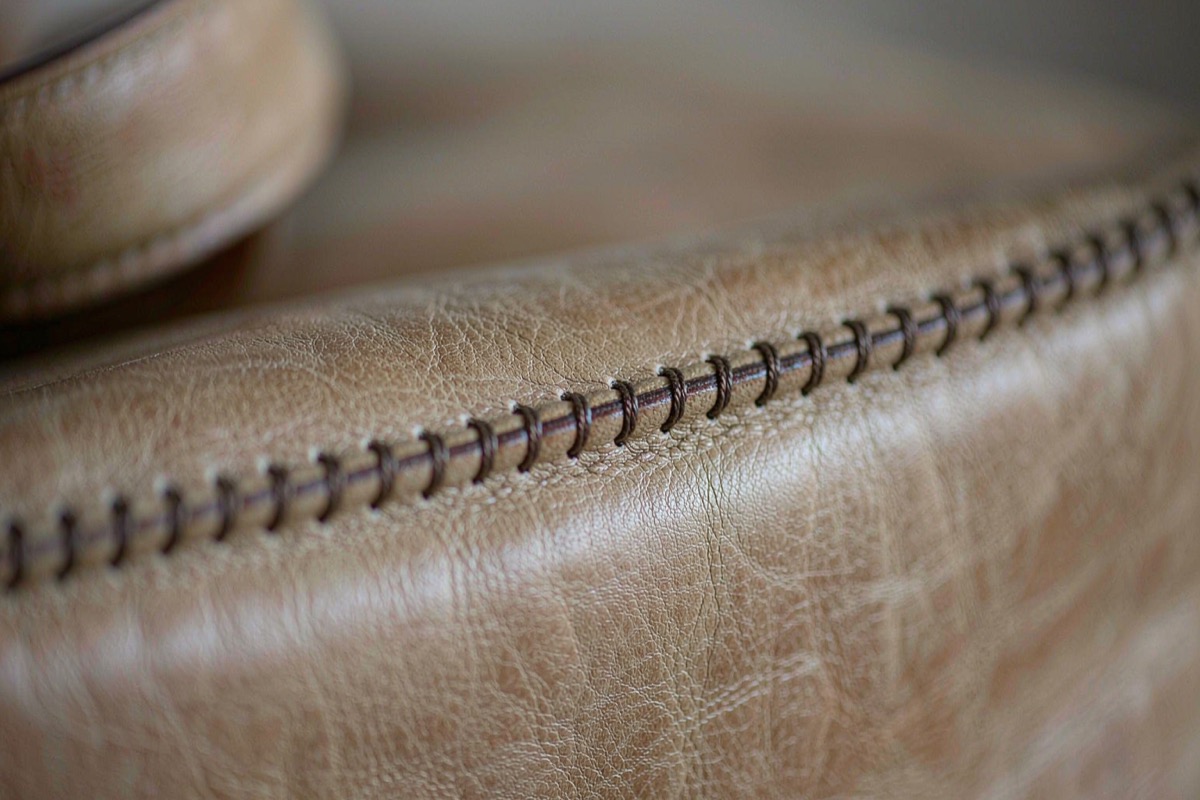
Stitching is the only construction detail you can judge without a spec sheet. Fabric weight hides behind adjectives, leather grades hide behind marketing, but a seam sits in plain sight — in the product photos, on the shelf, in your hand. Reading it answers the question no hang tag will: whether the maker was given time to finish the job.
Density: even beats dense
Closer stitches usually mean a slower machine, finer thread and a seam that holds its line under load. Wide, sparse stitches stretch out of alignment, and one snag can pull a whole run crooked. On leather, though, density has a ceiling: every stitch is a needle hole, and holes packed too tightly can weaken the hide along the seam. What predicts quality is evenness — stitch length that stays constant around corners, along zipper tape and through doubled layers. Uneven stitch length means the machine was pushed faster than the material allowed.
Lockstitch holds, chainstitch can unravel
Turn the piece over if you can. A lockstitch interlocks two threads inside the seam; it is the standard on quality bags, wallets and shirting, and it fails locally — one broken thread stays put. A chainstitch loops a single thread through itself, runs faster, and can unravel down the seam if an end lets go, which is why chainstitched denim hems walk open when a thread snaps. Chainstitch is a legitimate choice in workwear, where speed matters. On a handbag seam or a shirt side seam, though, lockstitch is the safer default, and its absence is worth a question.
Stress points decide
Stress points tell you more than flat runs. Look where straps meet the body, where handles anchor, at pocket corners and belt loops. A short, dense run of stitching crossing the seam — a bar tack — is the classic reinforcement, and a second stitch line beside the first does the same work. A bag whose handle anchors carry a single sparse line of stitching is a bag whose handles will go first.
The inside tells the truth
Finishing shows at thread ends. A few tails left untrimmed inside a lining suggest a rushed bench; a scattering of them per seam suggests worse. Interiors get less attention at inspection, so they are the honest half of any bag or garment. The same reading applies to handbag hardware, which rewards the same inside-out inspection.
When stitching is a reason to return
Separate cosmetic from structural. Wavy topstitching that stays evenly spaced is a taste problem; skipped stitches, thread loops sitting on top of the fabric, puckered seams on woven cloth or a seam shedding stitches out of the box are construction failures, and none of them improve with age. On bags, anything at a strap anchor, zipper tape or handle base is structural by definition — that is where load travels. If the flaw sits on a load path, return the piece. If it sits where nothing pulls, you are negotiating taste, not durability.
None of this requires training — a phone flashlight and two minutes cover it. The same discipline applies at the listing stage: the spec-sheet-first way of reading a product listing catches most of these problems before the parcel arrives, and the same seam logic decides the lifespan in wallet construction.
FAQ
- How can I tell lockstitch from chainstitch?
- Look at the underside: a lockstitch shows two interlocked threads and stays put when one breaks, while a chainstitch shows a looped single thread that can unravel along the seam if an end lets go.
- Is more stitches per inch always better?
- No. Dense stitching holds a line well, but on leather every stitch is a needle hole, and holes packed too tightly can weaken the hide. Even, constant stitch length matters more than maximum density.
- Which stitching faults justify a return?
- Skipped stitches, thread loops on the fabric surface, puckered seams and any fault at a strap anchor or zipper tape. Those sit on load paths and will not improve with age.