Re-Waxing Waxed Cotton, Step by Step
The conclusion first
- Waxed cotton is a system of two parts: a tight cotton weave and the wax saturating it.
- The cotton never wears out; the wax does.
- Re-waxing is just replacing the part that expires, and a jacket that gets the treatment yearly can serve for decades — Filson notes its oil-finish Tin Cloth can be re-waxed as often as needed for decades of service.
Drawn from the opening of this entry.
Waxed cotton is a system of two parts: a tight cotton weave and the wax saturating it. The cotton never wears out; the wax does. Re-waxing is just replacing the part that expires, and a jacket that gets the treatment yearly can serve for decades — Filson notes its oil-finish Tin Cloth can be re-waxed as often as needed for decades of service.
What rewaxing is and is not
It is maintenance, not repair. Nothing is broken when a waxed jacket stops beading; one of its two parts has simply run low. That framing matters, because owners who treat rewaxing as a rescue postpone it, and a jacket that goes years between treatments wets out, dries stiff, and creases where the dry fabric folds on itself.
Do the arithmetic on the alternative. A waxed jacket that wets out is not a jacket with a flaw; it is a jacket with an unfinished chore. The treatment is an evening at a table, not a bench estimate, and the weaves and seams under the wax outlast several rounds of it.
Which tin to buy
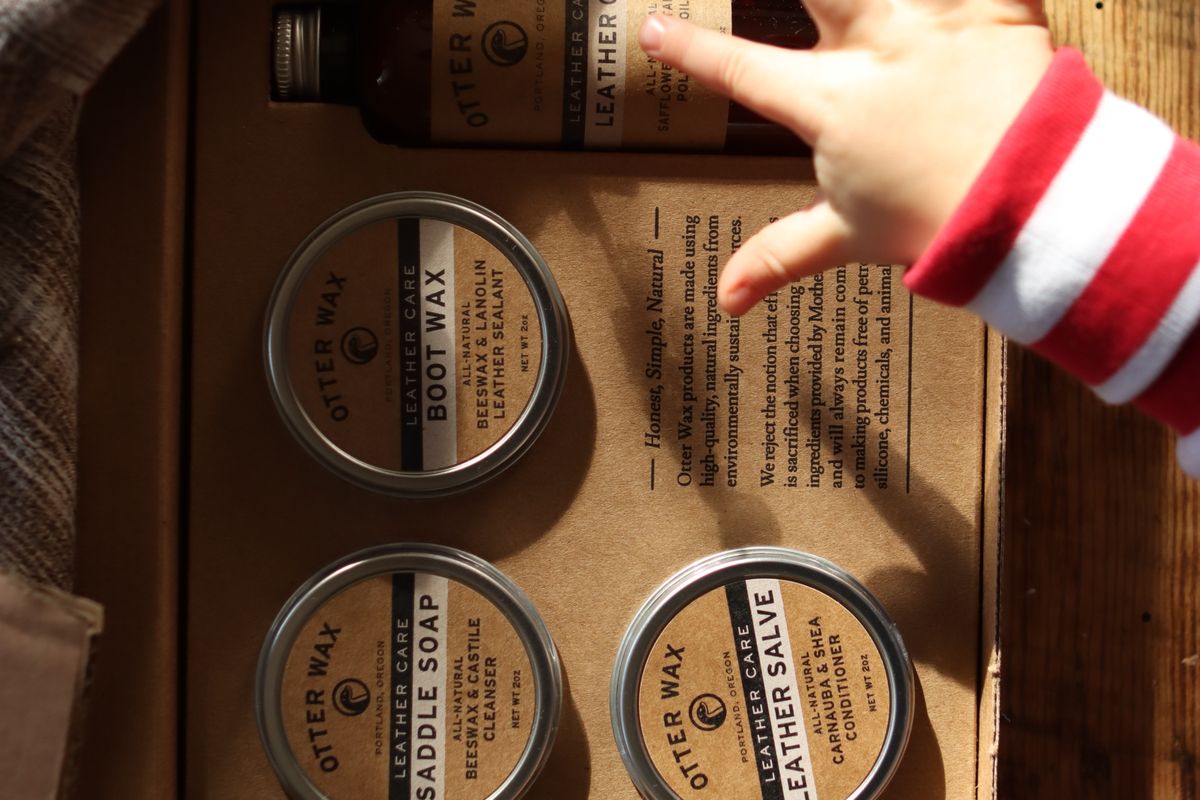
Wax dressings fall into two families. Paraffin-and-oil dressings are the traditional mill formula; beeswax-based dressings are the natural-fiber alternative, and they matter if you dislike petroleum products near your skin. Otter Wax documents its Heavy Duty Fabric Wax as beeswax blended with plant-based waxes and oils, with no paraffin, silicone or other petroleum synthetics — one end of the spectrum. Barbour’s Thornproof Dressing is the classic tin for its own jackets. Match the brand to the jacket when one exists: Barbour directs owners to check the care label for the right wax.
Dressings differ in firmness even within one family, and the label of the jacket settles the question faster than any comparison of tins. The maker knows which base the original proofing used, and the care label is the maker still talking to you.
One more rule from Otter Wax: do not strip old wax first. New wax bonds with whatever is already in the fabric. The exception is any jacket with a synthetic coating, which blocks penetration — their advice is to test a patch on an inside seam.
Rub-on bars, worked by hand
There are two working methods, and both are simple.
Rub-on bars. Rub the bar back and forth until friction softens the wax and it spreads into the top layer. Otter Wax designed its bar for exactly this — rubbing creates the heat that loosens the wax. Work it in with your fingers until the coat is uniform, paying attention to seams, creases and the shoulders, where wear shows first.
Friction does more than warm the wax. Pressing the bar across the weave pushes it into the high points of the fabric, and the finger-work that follows spreads it into the lows. A heavy coat takes the better part of an evening by this route, and the evening is the price of doing it with no equipment beyond the bar itself.
Tin dressing, softened with heat
Tin dressing with heat. Barbour’s method: stand the open tin in water hot enough to melt the wax — about twenty minutes to liquid — then work it into the fabric with a sponge or rag, keeping the tin in the hot water as you go. Keep dressing off the lining, the pockets, and a corduroy collar. For stick dressings, Barbour’s own tip is a hairdryer: pass moderate heat over the waxed area to soften it into the fabric, without holding the dryer too close. Work in sections, back panel first.
The two exclusions are not etiquette; they are function. A lining waxed by accident holds the jacket against your body instead of shedding off it, and waxed pockets turn every receipt into a glued one. The corduroy collar loses its nap under a dressing and never gets it back the same way.
Heat, in both methods, is a tool for moving wax into the fabric — not a step to rush. If the jacket feels hot against your wrist, the fabric is telling you to back the dryer off. Should the tin cool and thicken mid-section, stand it back in the water and carry on.
Curing: hang it and wait
Hang the jacket in a warm, dry place and give it time. Otter Wax documents a cure window of 24 to 72 hours depending on temperature, humidity and how heavily you applied; Barbour says hang it overnight in a warm room, away from other garments. Both makers’ numbers are looser than most care advice because the variable that decides the pace is your room, not the tin. Temperature and humidity set how fast the excess evaporates; the overnight figure and the 72-hour ceiling describe the same event from two climates.
The jacket may transfer wax to neighboring surfaces while it settles, which is why the hanger lives away from leather and upholstery.
Wear it early and the still-soft wax takes shine where a strap or a seat presses it, and pressure marks sit in the surface for the life of the coat. Waiting costs a weekend. The cure is ready when the surface no longer feels tacky.
The spots that go first
Do this once a year — both Barbour and Otter Wax recommend an annual cycle as the baseline — and spot-treat the shoulders after hard seasons.
The shoulders carry a bag strap, the elbows fold over a counter, and the collar takes rain first. Those three areas lose their dressing through friction long before the back panel does, which is why a jacket can stop beading at the shoulders while the body of it still sheds. Water that soaks in instead of beading is the read: the wax layer there has worn through, and the pale, dry look of the fabric at those points is the wax layer worn thin.
A partial treatment is a legitimate answer to a partial wear pattern. Work dressing into the shoulders and elbows, leave the rest alone, and schedule the full coat for autumn before the rains. Done on your calendar, the evening of work stays an evening; done on the rain’s calendar, it becomes a soggy weekend rescue.
What the routine buys
A jacket kept on this cycle returns the favor quietly. The weave does not wear out; each year replaces the part that does, and the patina of an old waxed coat — the creases at the elbows, the darker collar — is the record of that exchange done on time. For how waxed canvas compares against nylon and polyester in packs, see pack fabrics compared.
FAQ
- How do I know my waxed jacket needs re-waxing?
- Water stops beading and starts soaking in, and the fabric at the shoulders and elbows looks pale and dry. Filson's care guidance says simply to re-wax as needed to maintain water resistance; Barbour suggests checking annually.
- Can I wash a waxed cotton jacket in the machine?
- Never. Barbour's care guide warns that machine washing strips the wax coating permanently, after which the jacket cannot be properly re-waxed. Cold water and a sponge are the only cleaning it gets.
- Will re-waxing change how the jacket looks?
- Yes, temporarily darker and with a slight sheen. Otter Wax notes a faint tack that fades over days as excess oil evaporates. The jacket returns to its usual look as the wax settles.
Why clean wool is the only wool that survives a summer in the closet, what…
What tanning actually does to a hide, how long each process takes, and how the…
Why dirt flattens down before cold does, the front-loader and down-detergent…
Canvas totes arrive stiff and fade honestly. How ounce weight, mill sizing and…