Suede Care: Brushes, Erasers and Waterproofing
The conclusion first
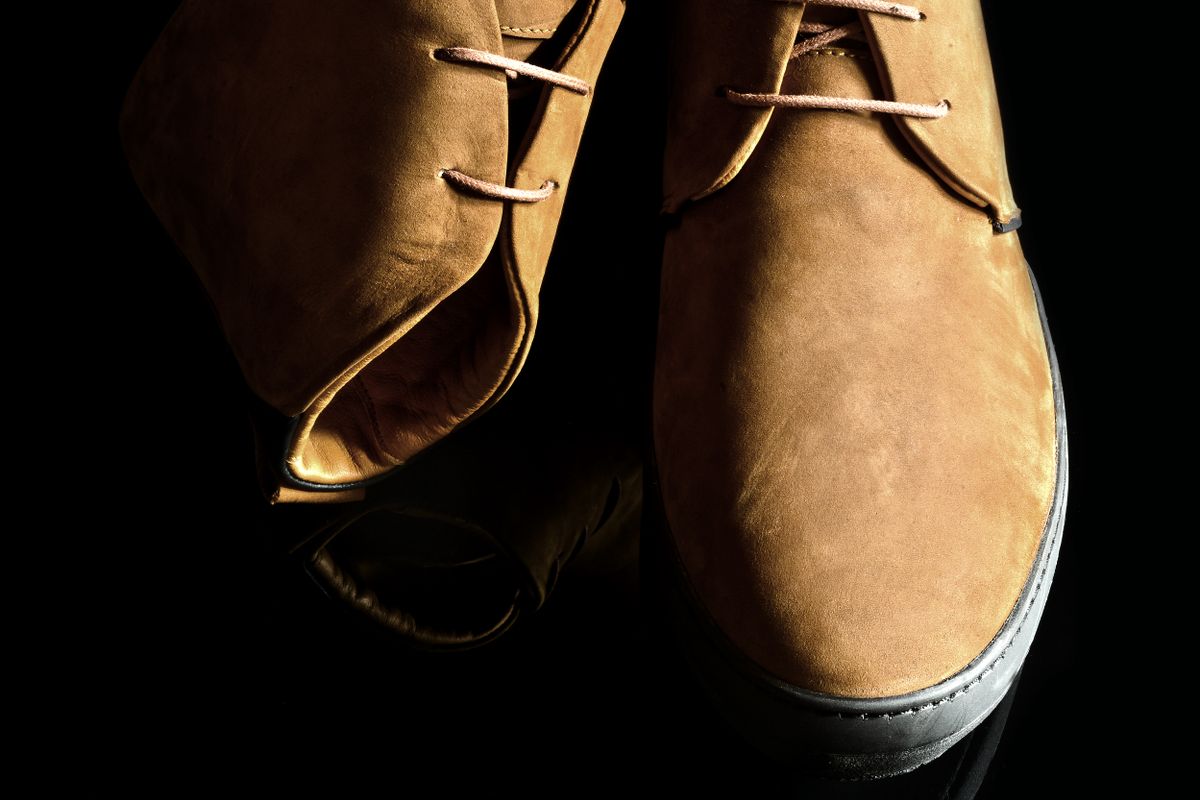
- Suede is the flesh side of a split hide, buffed until the fiber ends stand up as nap.
- That structure is why it feels the way it does — and why the care rule writes itself: protect the nap, and everything else follows.
- The top layer keeps the grain, which is where durable, wipeable leather comes from.
Drawn from the opening of this entry.
Suede is the flesh side of a split hide, buffed until the fiber ends stand up as nap. That structure is why it feels the way it does — and why the care rule writes itself: protect the nap, and everything else follows. Nearly all suede care is dry work. Water is a guest you invite rarely.
What suede actually is
A tannery splits a hide into layers. The top layer keeps the grain, which is where durable, wipeable leather comes from. The underside becomes split leather, and suede is that flesh side, sanded or brushed until the fiber ends stand up as a velvet-like surface. Nubuck is the mirror image: it starts from the grain side of a top layer and is sanded down, so it reads as suede to the eye but keeps the grain’s tighter, tougher fiber structure underneath.
The consequence of that open fiber surface is simple physics. Grain leather presents a sealed face to the world; suede presents thousands of fiber ends, each one wicking liquid and holding dirt. This is why suede stains show up first as a change in texture — a stiff patch, a flat shiny spot — before they show up as a change in color. Every tool in this article works by cleaning or rebuilding the nap. None of them works by sealing over it, which is also why the usual leather fix of conditioning has no place here.
The dry routine comes first
Dry brushing after each wear removes the dust that would otherwise work down into the fibers and set as grime. Run a crepe brush in short strokes, one direction, then flip the direction to lift the nap back up. This takes twenty seconds and prevents most of what people later call stains.
For scuffs and shiny spots, a rubber eraser — natural rubber, or crepe rubber — rubbed lightly over the mark crumbles and lifts the matted fiber. Jason Markk, whose suede system pairs a natural-rubber eraser with a brush, documents the same sequence: brush first, erase with light pressure, brush the debris away and revive the nap. Light pressure is the operating word; scrubbing tears fiber ends off and leaves a bald patch.
Brush choice follows the job. A crepe-bristle or natural-bristle brush is the daily tool: stiff enough to lift dust, soft enough not to scar the nap. A brass-bristle brush is the corrective tool — it opens nap that has matted flat or gone shiny from wear, and on tough scuffs nothing else works as well. The trade-off is real: brass cuts harder, so on fine or velvety suede use it with a light hand, straight strokes, and stop as soon as the nap stands up again.
Frequency matters as much as technique. Nap that has been flattened by one week of wear responds to two minutes of brushing; the same flattening left for a month, walked on and re-creased daily, sets into shine that takes the brass brush and an eraser to undo. A pair worn weekly wants a weekly brushing, and the habit costs less time than unlocking the front door.
When you need liquid
Only after the dry routine fails. Even then, minimal liquid is the rule: a foam cleaner on a brush rather than water poured on the shoe, worked in small circles, blotted dry, brushed back up as it dries. Jason Markk’s own care notes are blunt about the risk — dyed suede is likely to bleed from any contact with water, and the brand recommends testing an inconspicuous area first because suede’s grades behave unpredictably. Nubuck takes the same routine with a lighter hand.
The stains that need their own plan
Oil is the hardest common stain because suede wicks grease deep between the fibers. Blot a fresh spill with paper immediately, without rubbing, then dust the spot generously with an absorbent powder and leave it overnight to draw the oil out. Brush the powder away in the morning and reassess. A shadow that remains after two rounds of this is likely permanent; at that point the choice is a professional cleaner or acceptance.
Salt lines from winter slush look worse than they are, but only if you let drying happen first. Brushing damp salt grinds the crystals into the fibers; waiting until the shoe is bone dry, then brushing in one direction, removes most pale residue. Mud obeys the same counterintuitive rule: dry mud crumbles and brushes out, wet mud smears deeper with every pass. Let the mess dry before you touch it.
Water rings are usually a nap problem wearing a stain costume. Tap water leaves a mineral edge as it dries, but what reads as a “ring” is often flattened nap inside the outline and standing nap outside it. Brush the entire panel, not just the mark, and the boundary disappears; spot-treating only the ring makes the edge sharper.
Waterproofing spray: useful, not invisible
A fluorochemical-free or PFAS-free spray such as Jason Markk’s Repel adds real splash resistance — the brand documents up to four coats on suede, each dried fully before the next. Apply two honest facts to that promise. First, no product fully waterproofs a porous material like suede; spray buys you a mist, not a downpour. Second, sprays usually darken the nap a touch and can change its hand — on pale suede the shift is visible. Spray a hidden patch, let it dry, and judge before committing the whole shoe. And do it in ventilated air, not over the kitchen table.
Reapplication is part of the bargain, because the treatment wears where the nap wears: toe boxes, collar edges, anywhere the shoe creases. The honest test is a drop of water on the upper — if it no longer beads, the spray has done its time. Keep expectations at splash level regardless of how many coats you build up, and treat a soaked day as a drying job, not a failure of the product.
Storage beats rescue
Suede wants air. Keep pairs in their dust bags or a breathable box, never sealed plastic, and keep them dry — a damp closet grows the mildew that no brush will fix. Wet pairs dry at room temperature, away from radiators, which stiffen the leather underneath the nap; pack them loosely with paper so they hold shape while they dry. Brush before storage, not after, because dust that rides along for a summer is dust that sets. The full seasonal routine for leather of any finish lives in storing leather between seasons. Shoe trees in cedar help with the second job no brush can do: absorbing the day’s moisture back out of the fibers.
When the damage is past home care
Some failures end the home-care road. A bald patch where scrubbing tore the nap off does not grow back. Ink spreads under erasers and brushes until it covers more than it did. Oil that survived the powder treatment twice will survive it a third time too. These are cobbler questions, and the cobbler’s answer is usually re-dyeing or re-napping, both of which cost real money.
Price the repair against the pair before you hand it over. A $150 pair with a ruined toe is a $40 re-nap decision; a $40 pair with the same damage is a replacement. The mistake to avoid is the middle one — half-fixing a bald patch with hard brushing until the whole toe is bald. Stop at the first sign the nap is thinning, and decide with the numbers instead.
FAQ
- What is the difference between a crepe brush and a brass brush?
- Crepe rubber brushes lift dust and refresh the nap gently — the right default for regular care. A brass-bristle brush is more aggressive; it opens matted nap and works on stubborn shine, but used hard it can thin a delicate suede.
- Can I clean suede with water?
- Keep water as the last resort. Tap water can leave rings, and Jason Markk warns that dyed suede is likely to bleed on contact with water. Dry brushing and an eraser solve most marks with none of that risk.
- Does waterproofing spray change the color of suede?
- It can. Most sprays darken the nap slightly and alter its feel, and the change is hard to undo. Test on a hidden area first, and treat spray as splash protection — no product fully waterproofs a porous material like suede.
Why clean wool is the only wool that survives a summer in the closet, what…
What tanning actually does to a hide, how long each process takes, and how the…
Why dirt flattens down before cold does, the front-loader and down-detergent…
Canvas totes arrive stiff and fade honestly. How ounce weight, mill sizing and…