Storing Leather Between Seasons: Shape, Air and Darkness
A leather bag spends more of its life in a closet than on your shoulder. That math is worth taking seriously: the weeks it sits in storage decide more about how the piece ages than the days you carry it. Leather is skin, and skin reacts to its surroundings — moisture, heat, light, pressure. Storage is not a pause in the care routine. It is most of the routine.
Clean first, then let it breathe
Dust and body oils left on a hide over a season will set in as grime, so the storage routine starts with the same dry brush-down that keeps suede alive. Wipe smooth leather with a barely damp cloth, let it dry at room temperature, and leave the bag open and empty for a day so the interior dries out too.
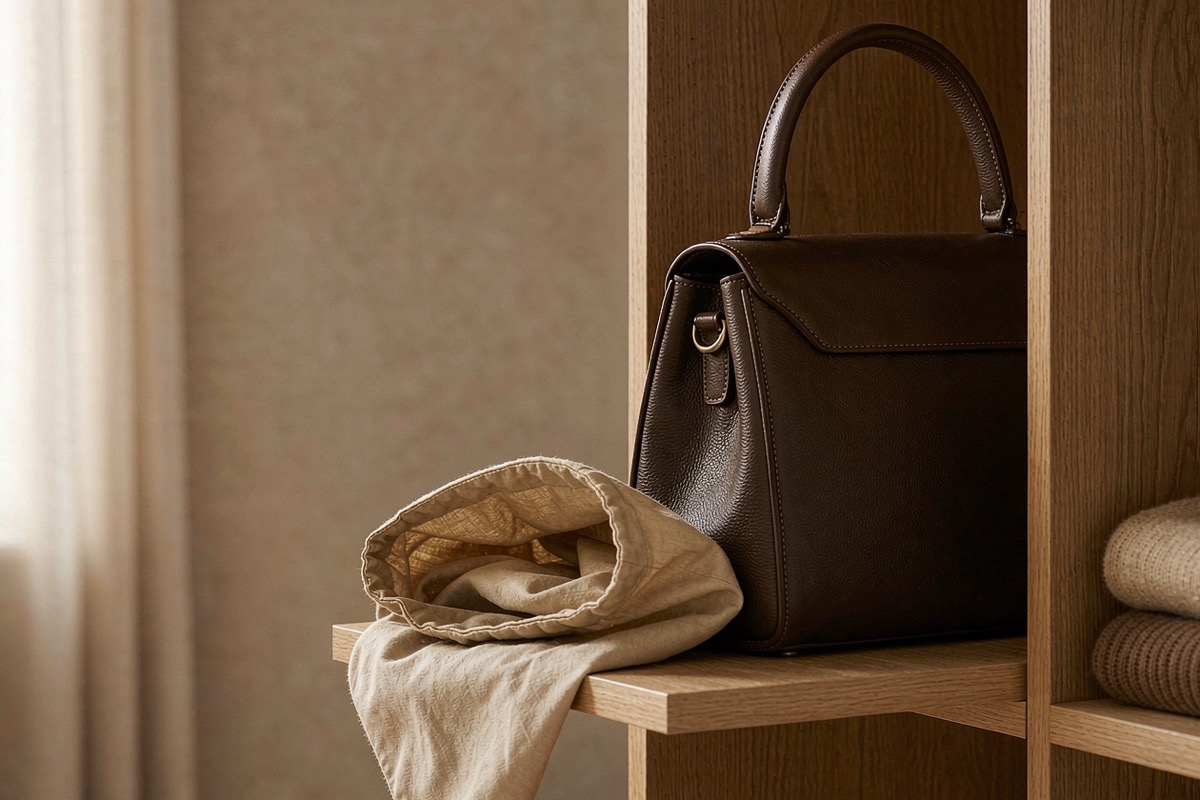
Then give it air. The instinct to seal leather in a zippered plastic pouch is exactly backwards: the Canadian Conservation Institute documents mould growing on leather once relative humidity climbs past 65%, and stagnant, warm air speeds the outbreak. A breathable cotton dust bag — the one the bag shipped with, or a pillowcase — blocks dust and scuffs while letting moisture escape. If the piece has metal feet or a structured base, keep it standing the way it was designed to sit.
Mind the humidity window
Leather tolerates a middle band and punishes both extremes. Damp storage — a basement, a laundry room, an exterior-wall closet in a humid summer — invites mould above the 65% mark. Desiccated storage is quieter but just as real: the same CCI guidelines describe an unhumidified winter interior dropping near 5% relative humidity, dry enough to crack and eventually split riveted leather cases. Pick an interior room’s closet instead, and if your winters run furnace-dry, a humidity gauge on the shelf costs less than one repair.
Shape is load-bearing
An empty slouching bag develops permanent creases where the leather folds on itself. Conservators support shaped objects — bags, gloves, shoes — from the inside, and the material matters: crumpled acid-free tissue or a cotton pillow fills the cavity without off-gassing or staining the lining. Wrap buckles and zippers in a little tissue of their own so hardware cannot press its imprint into the panel beside it.
The equal and opposite error is over-stuffing. The same guidance warns that packing a cavity tight stretches the leather and pops stitching. Fill until the piece holds its silhouette, then stop — it should look rested, not inflated.
Heat and light do quiet damage
Coach’s own care page states it plainly: do not leave leather in direct sunlight, as color fading may occur, and heat and moisture are exposures to avoid. The conservation literature explains the mechanism — UV breaks down collagen, and a nearby radiator or hot shelf lamp dries the local patch of hide until it shrinks and cracks. A dark closet shelf beats a sunlit console table every time.
One more piece of conservation math, as a reminder that patience and coolness compound: the CCI notes that every 5°C drop in room temperature roughly halves the rate of leather’s chemical decay. You need not refrigerate anything. Just stop storing good leather above the radiator.
A short checklist
Dry-brush, wipe, air-dry. Stuff lightly with acid-free tissue, hardware wrapped. Cotton dust bag, not plastic. Interior closet, away from sun and heat. Do that every season change and the leather will not need rescuing later — and for the deeper seasonal work, see re-waxing waxed cotton or how to check secondhand leather before it joins the rotation.
FAQ
- Can I store a leather bag in a plastic storage box?
- Not airtight. Sealed plastic traps moisture against the hide, and stagnant air is exactly what mould needs — the Canadian Conservation Institute puts the mould threshold at 65% relative humidity and notes that poor circulation makes outbreaks worse. A cotton dust bag, or nothing at all, is the safer container.
- Should I condition leather before putting it away for the season?
- Clean it, yes; drown it in conditioner, no. Conservators caution that applied oils oxidize over time, darkening and hardening leather instead of feeding it. Save conditioning for the wearing season — see our piece on conditioning without darkening — and store the piece clean and dry.
- Where is the best place to store leather at home?
- An interior closet that stays cool, dark and dry year-round. Avoid attics, basements and garages (humidity swings), radiator-side shelves (heat dries and cracks hides) and anywhere in direct sun — Coach's own care page warns that direct sunlight fades leather color.