How to Read an Umbrella: Ribs, Canopy and Mechanism
The conclusion first
- The numbers that predict lifespan are smaller: rib count, fabric density, whether the canopy vents, and what opens it.
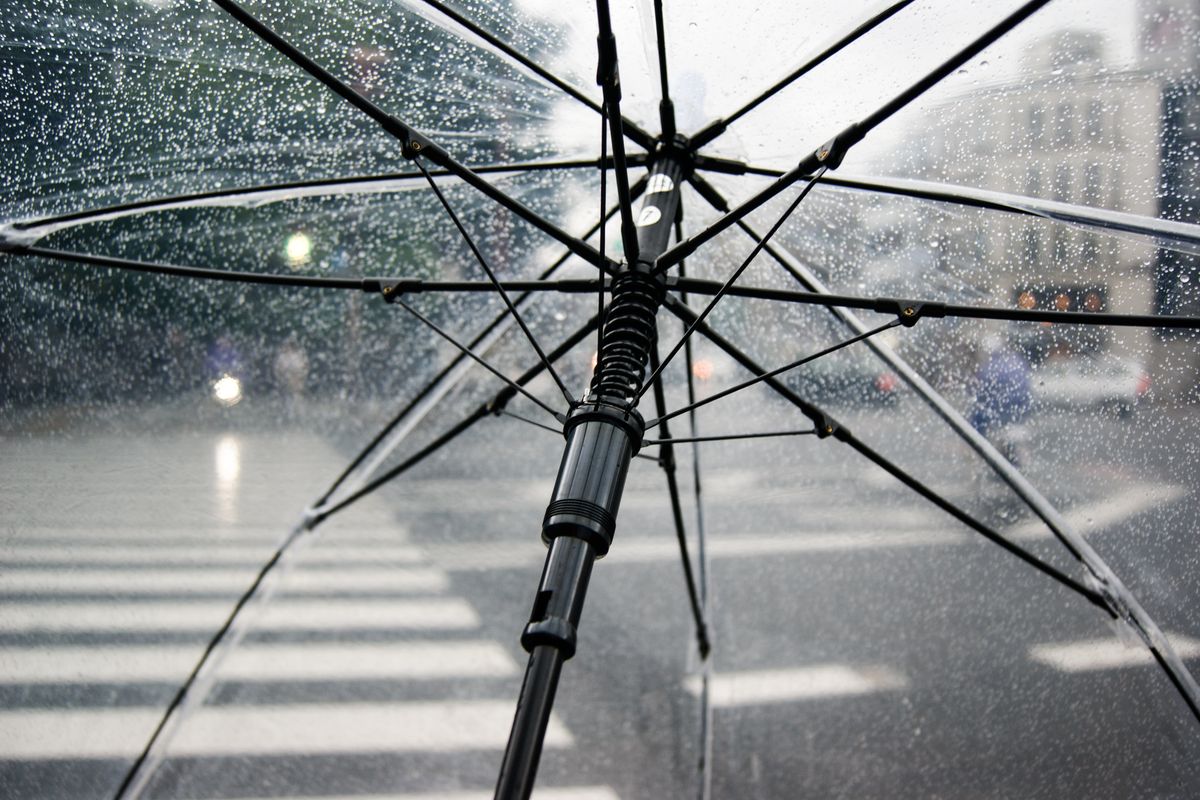
- Ribs are the arms that hold the canopy taut; count them from underneath.
- Eight ribs is the standard on most stick and folding umbrellas; sixteen on large and premium models.
Drawn from the opening of this entry.
Umbrella listings sell size. The numbers that predict lifespan are smaller: rib count, fabric density, whether the canopy vents, and what opens it.
Rib count is the frame’s budget
Ribs are the arms that hold the canopy taut; count them from underneath. Eight ribs is the standard on most stick and folding umbrellas; sixteen on large and premium models. The extra ribs tension the canopy more evenly, so fabric flutters less and wind slides off instead of catching a panel. The cost is weight, a bulkier fold and more joints — and joints are where frames fail.
Frame material matters as much as count. Steel ribs are stiff and durable but heavy; aluminum is light but takes a permanent set when a gust wins; fiberglass flexes and springs back, which is why storm umbrellas mix it into the rib line. A frame listed as “fiberglass ribs, aluminum shaft” is built for flex at the tips and weight at the center.
The canopy is fabric plus finish
Pongee is the word on most listings. Historically a silk cloth, on modern umbrellas it almost always means a finely woven polyester. The “T” number — 190T, 210T — is thread density per square inch, so higher is denser and usually tougher. The number alone says nothing about weight or coating, which is why two “210T pongee” canopies can behave differently in the same rain.
What makes water bead is the finish, not the weave: a water-repellent coating, often PTFE-based, applied to the outer face. That coating wears off with folding and sunlight and can be re-treated; the weave underneath never becomes waterproof on its own. Fabric specs are read the same way everywhere — density first, finish second — as with pack fabrics compared.
Vented canopies — a second, shorter inner layer — exist for wind. The gap between the layers lets air escape upward instead of building pressure under the canopy, which is how most “windproof” claims work, at the cost of a little weight and bulk.
Auto versus manual
An automatic umbrella stores a compressed spring inside the shaft; press the button and it drives the runner up and snaps the ribs open. That convenience adds wear points a manual frame lacks. The button spring fatigues first; that is the classic early failure. The sliding runner binds next, once dust and moisture get into a shaft that was stored wet.
A manual frame — push the runner up by hand until it locks past the rib pivots — has nothing under tension when closed and typically outlasts its automatic twin. Note what this does not mean: ribs bending in gusts is the most common failure under either mechanism, and that is a frame-material question, not a spring question. When a spring does go, the assembly is sealed inside the shaft, so repair usually means replacing the shaft section — what a bag warranty covers walks through the same repair-versus-replace call for bags.
How a gust actually breaks a frame
Wind rarely tears canopy fabric. What it does is build pressure under the dome until the whole frame snaps inside out, and where that failure lands depends on the rib line. Fiberglass flexes and returns to shape. Aluminum takes a permanent bend and stays bent. Steel resists, but it passes the load down to the joints instead of absorbing it.
Every rib pivots on a pin at the joint, and every inversion works that pin a little looser. A loosened rib lets its panel sag; a sagging panel catches more wind than a taut one; the next gust finds it faster than the last. That feedback loop is the real service-life story. An umbrella that comes through a season of hard gusts with its geometry intact has usually earned several more seasons, because the pivots are still tight and the panels still sit where the maker tensioned them.
After an inversion, do more than snap the frame back. Open the umbrella fully and check that every rib still runs straight to its tip before you close it. A rib sitting slightly out of line will keep tucking itself under the canopy, and each tuck works the joint further out of true.
Where folding wear accumulates
A stick umbrella has one moving job: open and close along a single shaft. A folding umbrella does the same job through two or three telescoping sections, and every fold line across the canopy is a crease the coating has to survive. Wear concentrates in predictable places: along those creases, at the rib tips that drag across fabric as the frame closes, and inside the sleeve the umbrella slides into. More fold segments mean tighter curves at each crease, which is why the most compact umbrellas tend to be the ones whose finishes fade first.
None of this argues against a folding model. It argues for knowing where the meter is running. Crease wear is why a canopy that beads perfectly in month one can wet out on the shoulders by month ten while the frame underneath is still sound — the fabric and the mechanism age on separate clocks.
Drying and re-treating the finish
Moisture is the quiet killer. An umbrella closed while damp grows mildew on the finish, corrodes the rivets at the joints, and lets the runner bind in the shaft, which is precisely the automatic-mechanism failure described above. Dry it standing open, then store it loose rather than cinched into its strap.
The repellent coating wears with folding cycles and sunlight long before the polyester underneath does. Spray-on re-treatments bring beading back without touching the frame, the same renew-the-treatment logic behind rewaxing waxed cotton: the weatherproofing lives in the finish, so the finish is what gets maintained.
Reading the listing
| Spec | What to look for |
|---|---|
| Canopy diameter | About 100 cm covers one; 120 cm and up covers two |
| Rib count | 8 standard, 16 on large and premium frames |
| Rib material | Fiberglass flexes; steel lasts; aluminum dents |
| Canopy fabric | Polyester pongee, density in T, plus a coating claim |
| Vented | Double layer if you commute in wind |
| Mechanism | Auto for one hand, manual for service life |
Diameter is quoted as the full span when open, not the folded length, and it decides whether you stay dry. Everything else on the list decides how many seasons you stay dry for.
FAQ
- Is a 16-rib umbrella better than an 8-rib one?
- It holds the canopy tauter, so the fabric flutters less and sheds wind better. The cost is weight, a bulkier fold and more joints — and joints are where frames fail. Eight ribs is the standard because it is the cheaper engineering answer, not the better one.
- What does 210T pongee mean?
- Pongee on a modern listing almost always means a finely woven polyester, and the T number is thread density per square inch — higher is denser. The number says nothing about fabric weight or coating, which is why two 210T canopies can perform differently in rain.
- Do automatic umbrellas break faster than manual ones?
- The canopy and ribs wear at the same rate either way. What fails more often on automatics is the mechanism itself: the release-button spring fatigues first, then the sliding runner binds if the shaft is stored wet. A manual frame has nothing under tension when closed and usually outlasts its automatic twin.
The shielding works in the lab; the crime barely exists. What independent tests…
Pique and point seams, hand-sewing versus machine work, the four leathers that…
Gram weights, interlining choices, self-tipped ends and the slip stitch on the…
What separates sheet-acetate frames from injected plastic: the Italian supply…