How to Buy Leather Gloves: Seams, Hides and Linings
The conclusion first
- Gloves are the accessory where grading shows fastest, because they are worked hardest.
- Nothing you own bends at every joint hundreds of times a day while taking rain, salt and steering wheels in turn.
- Cheap gloves make their compromises at the seams, the hide and the lining, and all three can be checked in under two minutes in the shop.
Drawn from the opening of this entry.
Gloves are the accessory where grading shows fastest, because they are worked hardest. Nothing you own bends at every joint hundreds of times a day while taking rain, salt and steering wheels in turn. Cheap gloves make their compromises at the seams, the hide and the lining, and all three can be checked in under two minutes in the shop.
Three seam types
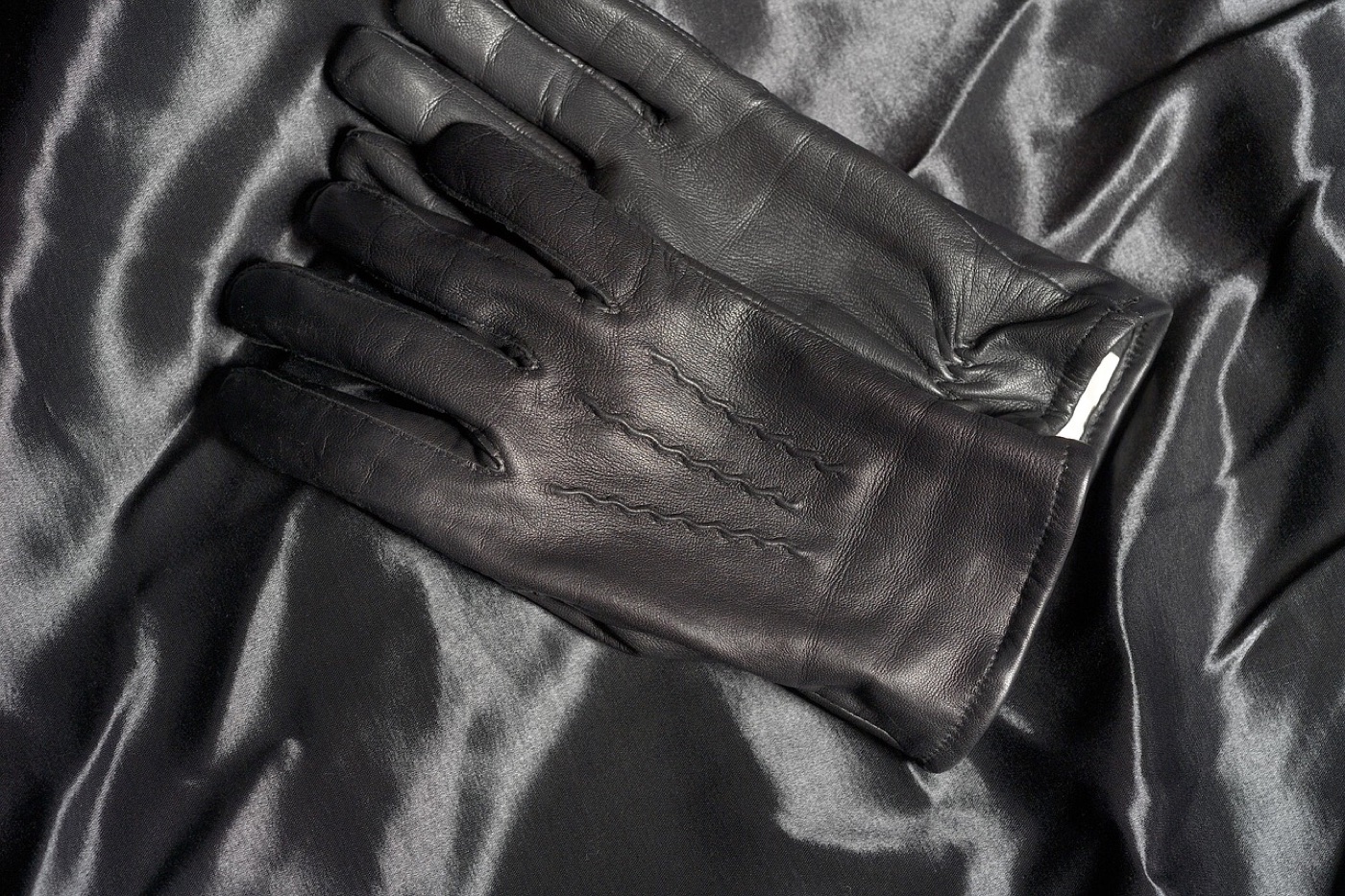
Machine-sewn gloves dominate the market, and a tight machine lockstitch is not a fault; it is the standard under 80 dollars. The two hand constructions sit above it. Point seams run a raised ridge of stitching on the outside of the back of each finger, decorative but structural in origin: the ridge is the seam itself, turned outward so the interior stays smooth. Pique seams are the dress standard, entirely on the inside, the two cut edges of leather butted and stitched through with needle and awl so the exterior shows an unbroken line down each finger. A pique seam can be opened and re-stitched; a blown machine seam on a lined glove usually cannot.
The asymmetry matters at the price difference. Roughly four times the bench labor of a machine seam is the working estimate for pique, which is why hand-finished pairs start where machine-made ones end. Check the fingertip of every glove: puckers, loose loops and thread ends are where rushed benches fail, and the same inspection logic as reading stitching quality applies at glove scale. Pull gently along each finger while you watch the seam; gaps that open at the holes under light tension will open in wear.
The hides that matter
Lamb nappa is the dress standard: fine-grained, thin, soft from the first wearing, and honest about its limits — 0.5-millimeter lamb takes scratches as a matter of course. Hair sheep leather, often sold as cabretta, is the workhorse: similar smoothness to lamb with more tensile strength, which is why driving and daily-wear gloves favor it. Deer hide gives the most stretch and the best wet-weather tolerance, at the cost of a slightly fuzzy grain. Peccary, the wild pig hide from South America, sits at the top: thick yet supple, with a grain of intersecting lines, priced accordingly and worth it for a once-a-decade purchase. Any glove whose listing says only “genuine leather” is hiding the species, and the evasion runs through leather grades explained.
Linings decide the season
The hide holds the weather out; the lining holds the warmth in and does most of the deciding about comfort. Cashmere lining is the winter standard, insulating even when flexed all day, comfortable to freezing and usable well below it. Silk lining is the dress choice, adding little bulk so a glove can go on over a shirt cuff, adequate into the low forties. Rabbit and lambswool fur linings are the old-school deep-winter option, warmest of all but bulky and prone to compressing flat. Unlined gloves are legitimate for driving and mild weather, and they are the only ones where seam quality is fully visible.
Lining condition is a purchase-time check, not just something you discover in January. Turn the cuff toward the light and look for thin patches or pilling at the palm, where grip pressure concentrates, and along the cuff edge, where the glove goes on and off. On fur linings, the pile should show even density across the palm with no bare tracks. A lining that has already thinned at the palm is the glove’s clock, already run most of the way.
Where gloves fail first
Fingertips blow out before any other part of a glove, because they take the sharpest bends against the hardest objects. The seam at the base of the thumb is the second casualty; it folds every time the hand closes around a handle or a handrail. On lined gloves the lining often goes before the hide does, abrading against the seam allowances at the fingertips and pulling loose at the cuff. Salt is the outside enemy. The white rings left by road slush are salt crystals that stay behind as the water evaporates, and they keep drawing moisture out of the hide for as long as they sit. Wiped off early with a barely damp cloth, a salt ring leaves nothing behind. Left for weeks, it stiffens the leather into a crease that never quite relaxes.
Drying, salt and the off season
Wet gloves should dry at room temperature, and nowhere near a radiator. Forced heat drives out the oils that keep a hide flexible and shrinks the fibers as they go, which is how gloves left on a warm car come back stiff and a half size smaller. Crumple a page of newspaper loosely into each finger, let a full day do the work, and condition only once the leather has dried all the way through; conditioning leather without darkening covers the paste-and-wipe routine, and suede-backed or roughout gloves follow suede care basics instead. Off season, gloves store flat in the box they came in, fingers relaxed; the wider rhythm of that routine sits in storing leather between seasons.
Sizing by the tape
Glove sizes are hand girth in inches around the palm at the knuckles, but length is the number that actually predicts fit, since a glove too short in the fingers cannot be stretched long. Measure from the wrist crease to the tip of the middle finger. Fit should feel almost too snug in the shop: leather relaxes a third of a size in wear, and the lining compresses too, so a glove comfortable on day one is loose by spring. Measure both hands while you are at it: they differ slightly, and a glove bought to the smaller hand will always feel short on the bigger one. Get the seam and the lining right for your winter, buy to the tape rather than the habit of your coat size, and the pair you choose is the last decision the gloves will ever ask of you.
FAQ
- What are pique seams?
- A pique seam joins the finger parts edge to edge from the inside, with the two leather edges butted and stitched through with an awl, so nothing protrudes. It takes roughly four times the labor of a machine seam and is the mark of hand-finished dress gloves.
- Cashmere or silk lining?
- Cashmere for real winter: it insulates even when compressed and stays warm to about freezing and well below. Silk for dress gloves and shoulder-season cold: it slides on easily and adds warmth without bulk. Wool-blend linings are the cheap middle and feel bulky faster.
- How should leather gloves fit?
- Snug to slightly tight out of the box, because leather gives around a third of a size in wear and lining compresses. Measure hand length from wrist crease to the tip of the middle finger and buy to that number, not to the size you wear in other garments.
The shielding works in the lab; the crime barely exists. What independent tests…
Rib count, canopy fabric and the opening mechanism decide whether an umbrella…
Gram weights, interlining choices, self-tipped ends and the slip stitch on the…
What separates sheet-acetate frames from injected plastic: the Italian supply…